An AI demo can answer questions about a handful of documents. Getting the same application to work for a support team is a different job. Customer records have access restrictions, policies change, and an answer that sounds reasonable may still send someone down the wrong path.
An AI forward deployed engineer works through those details with the people who will use the software. The role combines application development, AI engineering, and direct customer work, with responsibility extending beyond the first demonstration.
For employers, the question is whether that combination will help a project reach production. For engineers, it is whether they enjoy solving a business problem while also discovering what the requirements actually are.
Quick takeaway: An AI FDE is an engineer who works closely with customers to build and deploy AI applications. Strong coding matters, but so do asking useful questions, testing model behavior, and helping a team run the finished system.
What Is an AI Forward Deployed Engineer?
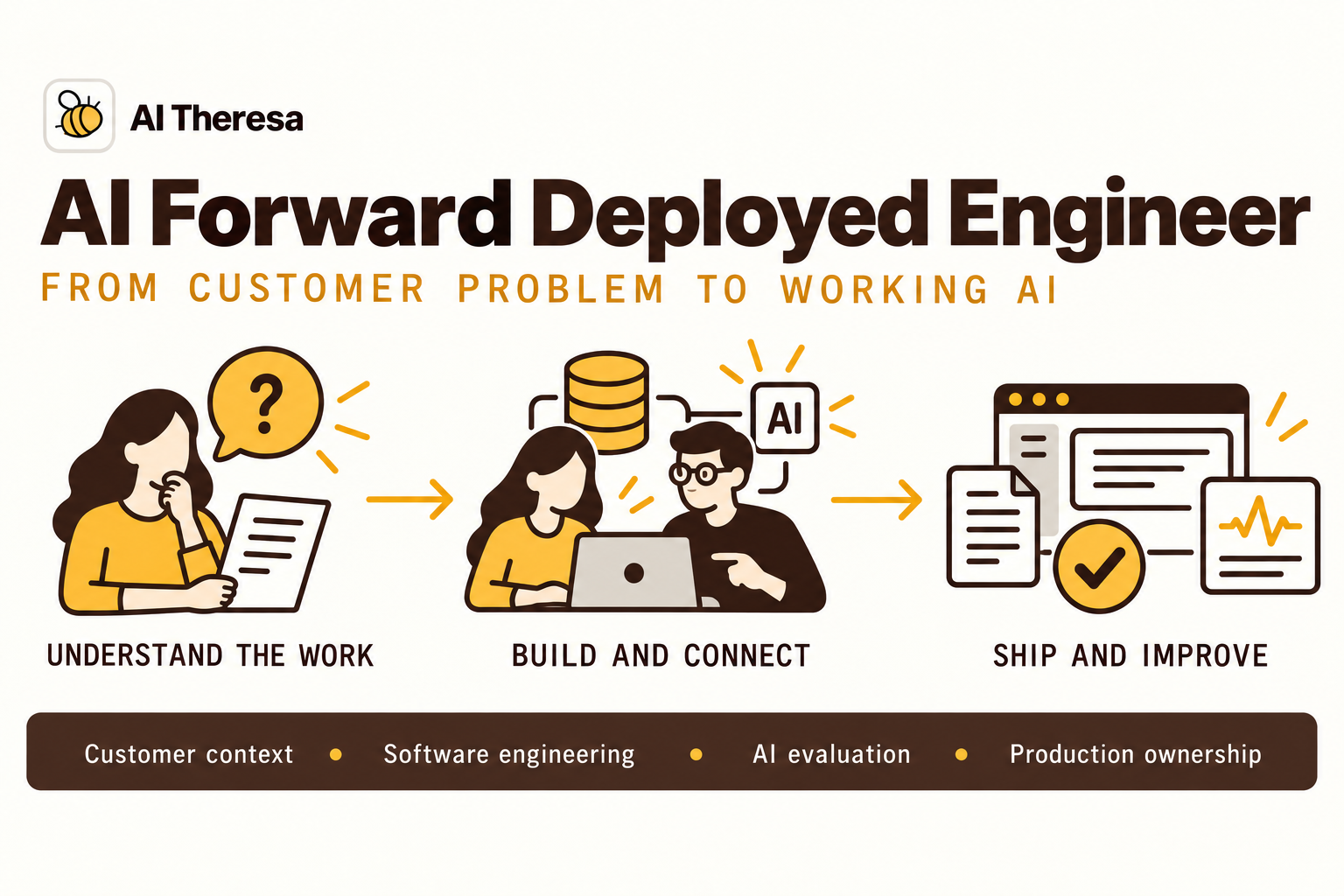
An AI forward deployed engineer, often shortened to AI FDE, is a software engineer who works directly with a customer's team to turn a business need into a working AI application. The customer may be external or another team within the organization.
“Forward deployed” describes proximity to the problem. It means spending time with users and working in their technical environment, sometimes onsite. It does not mean the engineer is an autonomous AI agent. Here, AI describes the systems the person builds.
The title varies between employers. Palantir's Forward Deployed AI Engineer role combines customer work with building production workflows and feeding lessons back into AIP. Databricks describes its AI FDE team as delivering customer AI applications through professional services engagements. The shared feature is responsibility for getting useful software into the customer's hands.
Get Started with Theresa for FREEWhat Does an AI FDE Do?
Consider a support team that wants help answering account questions. An AI FDE might begin by watching how agents find information, which systems they open, and when they escalate a request.
That investigation could reveal that the biggest delay comes from switching between a ticket, an account record, and a policy document. The first useful application might retrieve those records together and draft a response for review. Automatic replies could wait until the team understands the failure cases.
A day might include interviewing a support lead, fixing an API integration, examining an incorrect answer, and showing an updated version to users. The balance shifts throughout the project. Early work is heavy on discovery; later work includes releases, monitoring, and training.
The engineer also decides where AI adds little. A fixed eligibility rule may belong in ordinary code even when a model helps interpret the customer's message.
Get Started with Theresa for FREEKey Roles and Responsibilities
Turn requests into a buildable problem
“We need an AI assistant” is a starting conversation. The FDE works out who needs help, what information they use, and what would count as an improvement. For the support example, that might be less searching without increasing corrections or escalations.
Connect data and business systems
The engineer builds integrations, checks identifiers, and handles permissions. A model should not receive every customer record simply because the application has a database connection. Access needs to follow the person and task using it.
Build and evaluate the application
This includes retrieval, prompts, model calls, interfaces, and any tools the application can invoke. Testing covers the whole process: finding the right information, producing a supported answer, and handling requests it cannot complete.
Support adoption and maintenance
Users need a way to report mistakes and understand the application's limits. Technical teams need logs, release instructions, and a clear owner. The FDE also separates reusable product improvements from changes that only one customer needs.
Get Started with Theresa for FREEHow AI FDEs Work
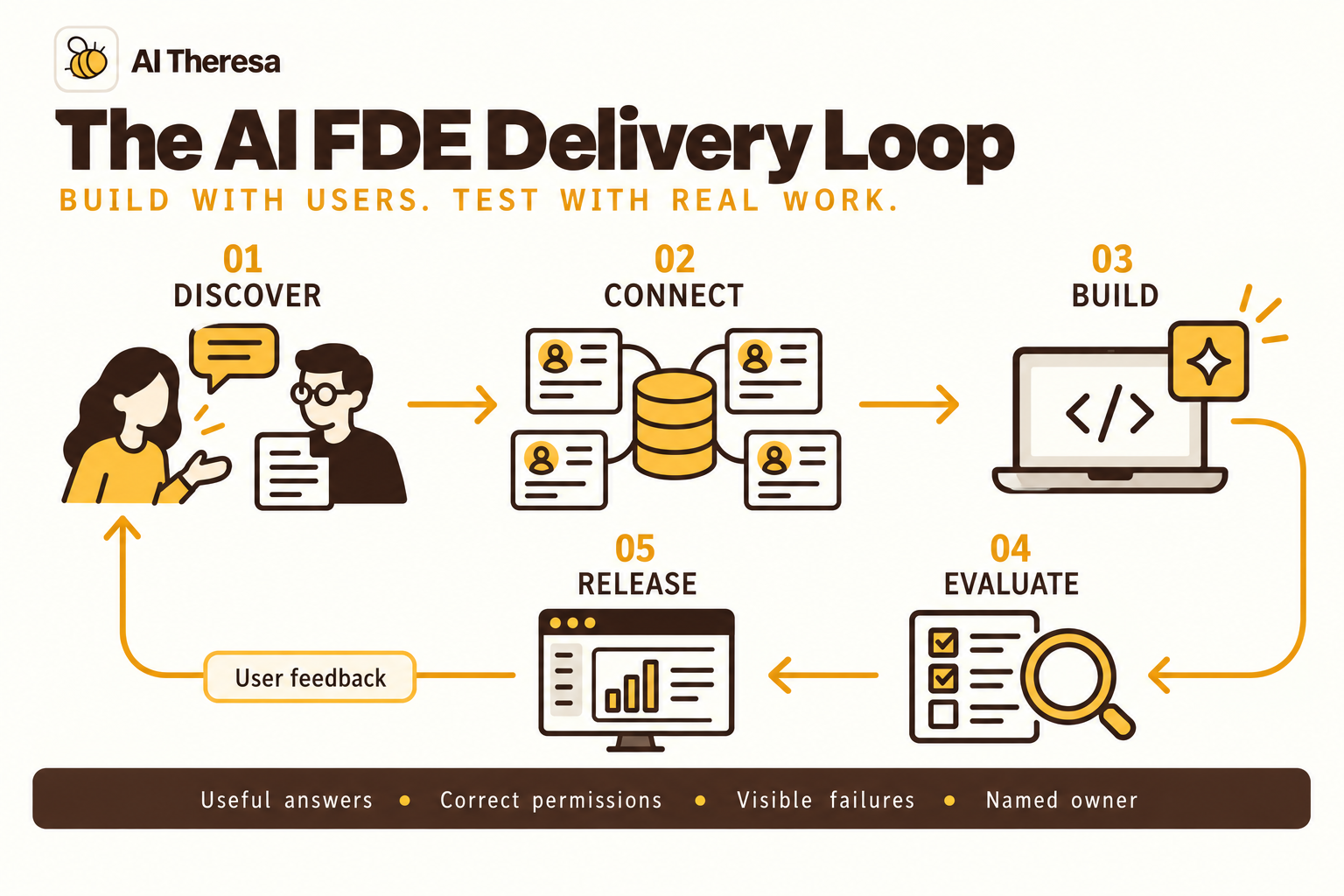
An engagement usually moves through a loop rather than a single handoff from requirements to code.
- Observe the work. Follow a real task from start to finish. Collect examples of the exceptions, not only the easy cases.
- Choose a first outcome. Agree on one workflow, the people using it, and how the team will judge the result.
- Connect and build. Use approved data and existing systems to create a small working version. Show it to users early.
- Evaluate failures. Try missing records, ambiguous requests, outdated documents, and restricted accounts. Decide when the application should ask for help.
- Release and learn. Start with an appropriate user group, monitor what happens, and use reported mistakes to improve the next version.
For a support assistant, evaluation might compare draft answers with responses reviewed by experienced staff. The team should also check whether the application cites the right policy and whether its suggested next step is permitted.
MLflow's evaluation-dataset guidance describes using examples from application traces to build and improve test datasets. That connects testing to the questions users actually ask, rather than a collection of demonstrations chosen because they work well.
AI FDE vs. Software Engineer
An AI FDE is a type of software engineer. The difference is usually how the work is organized and how much direct responsibility the engineer has for a customer's outcome.
| Dimension | AI forward deployed engineer | Product software engineer |
|---|---|---|
| Starting point | A customer's workflow and constraints | A product roadmap or service requirement |
| User contact | Frequent discovery, demonstrations, and feedback | Varies by team and product |
| Delivery | Application plus customer integrations and rollout | Features or services used across the product |
| AI work | Model behavior, evaluation, retrieval, and tool use | Depends on the product being developed |
| Success | Working software adopted in the customer's process | Product usefulness, quality, reliability, and scale |
| Reuse | Generalize lessons from individual deployments | Maintain shared product capabilities over time |
These boundaries overlap. Product engineers can work closely with customers, and FDEs can contribute reusable platform code. Neither title tells you how much time someone spends coding. When considering a job, ask what the team shipped recently and who owned the implementation.
Get Started with Theresa for FREEEssential Skills for AI FDEs
Software engineering and data fluency
Python, SQL, APIs, version control, and automated testing form a useful foundation. Depending on the application, TypeScript or another interface language may matter just as much as model knowledge. Engineers need to debug failures across data sources, services, and user interfaces.
Data fluency means understanding where a value came from and whether it is trustworthy. If an assistant reports the wrong inventory count, the cause may be a stale source or a duplicate join rather than the model.
Applied AI and evaluation
An FDE should understand retrieval-augmented generation, model selection, structured outputs, and tool calling. Just as important is recognizing when a simpler design will work. Anthropic's guide to building effective agents recommends starting with simple approaches and adding complexity when the task requires it.
Evaluation requires judgment as well as tools. A response can be grammatically excellent and factually wrong. Test whether it uses the available evidence, respects access rules, and helps the user complete the intended task.
Tools used in practice
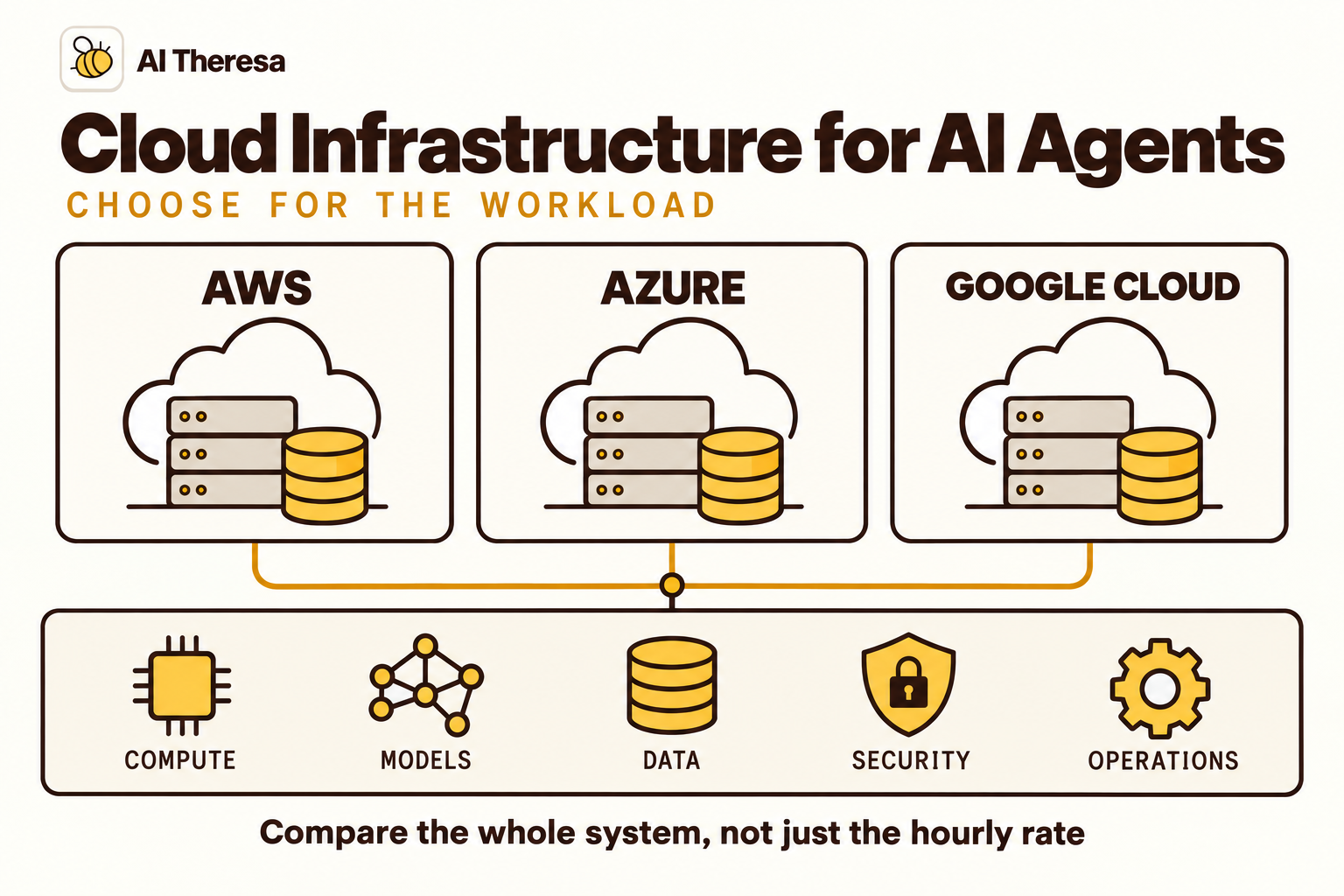
The stack follows the customer's environment. Common categories include model APIs, databases and search systems, application frameworks, cloud infrastructure, and evaluation tools. Databricks' AI FDE listing names Hugging Face, LangChain, DSPy, and major cloud platforms among relevant technologies.
MLflow Tracing is one example of tooling for inspecting an application's execution. A trace helps an engineer see which retrieval or model step produced an unexpected result. Knowing how to investigate that result matters more than collecting framework names on a résumé.
Customer communication
Good FDEs can explain a technical limit without burying the customer in terminology. They ask about exceptions, write down decisions, and know when a business owner needs to settle a disagreement. Listening to the person doing the work often changes the design more than another model experiment.
Salary and career opportunities
There is no single salary band for the title. These employer-posted examples were checked on October 10, 2026:
| Employer and role | Location | Posted annual range |
|---|---|---|
| Palantir: Forward Deployed AI Engineer | New York, US | US$135,000–$200,000 salary; additional compensation may apply |
| Databricks: AI Engineer, AI FDE | United States | US$152,900–$210,155 local pay range; bonus and equity eligibility may apply |
| Anthropic: Forward Deployed Engineer | London, UK | £225,000–£255,000 annual salary |
These are individual vacancies with different locations and requirements, not a market average or a guaranteed offer. Databricks distinguishes salary for non-commissionable roles from on-target earnings for commissionable roles; confirm how a particular offer is structured. Compare base pay, variable compensation, equity, travel, and working arrangements separately.
For candidates, a strong portfolio shows a deployed application, its evaluation results, and a failure you diagnosed. Experience in backend development, data engineering, or applied ML can be relevant when paired with customer work. Possible next steps include technical leadership, platform engineering, or leading an applied AI team; the path depends on the employer.
When interviewing, ask how the employer divides discovery, sales support, coding, and ongoing maintenance. Request an example of a recent project and how the team decided it was finished. A title can cover very different jobs: one position may involve building applications every week, while another spends much more time on workshops and demonstrations. Neither arrangement is inherently wrong, but candidates should know which kind of work they are choosing.
Get Started with Theresa for FREECommon AI FDE Use Cases
Support and internal knowledge
An assistant can retrieve approved information, summarize an account's history, and prepare a response. The FDE handles document freshness, user permissions, and escalation when the evidence is incomplete. A useful first release may assist employees before answering customers directly.
Document intake
A team processing supplier forms may need fields extracted, checked against existing records, and routed for review. The application should make uncertain values visible. A reviewer needs to see the original passage before accepting an extraction that changes a business record.
Operational analysis
An analyst might ask why a metric changed or which orders need attention. The FDE connects the question to maintained definitions and data sources. Generating a query is only one step; interpreting the result requires knowing what the columns mean and whether the inputs are complete.
Engineering and production support
AI can help assemble logs, recent changes, and related incidents for investigation. An FDE can connect that context to an engineer's workflow while keeping proposed fixes separate from authorized production changes. These are examples of project shapes, not claims about a particular customer's results.
Get Started with Theresa for FREEBenefits of AI FDEs
Fewer misunderstandings between users and builders
Direct contact lets an engineer test an assumption while the design is still easy to change. A user may explain that a missing exception matters more than faster answers. That feedback can prevent the team from polishing the wrong feature.
Continuity through deployment
The engineer who learned why the process is difficult can stay involved while the application is built and released. There is less context to reconstruct at each handoff, provided the work is documented rather than kept in one person's head.
Better feedback for the product team
Deployments reveal recurring problems with integrations, setup, and usability. Feeding those patterns into the shared product can reduce custom work for future customers. The benefit depends on a team making time for that reuse instead of treating every engagement as an isolated project.
Get Started with Theresa for FREEChallenges of AI FDEs
Scope can grow faster than the team
An assistant project can uncover broken data pipelines or conflicting definitions. Some issues block delivery; others belong in later work. Without that distinction, one engineer can become responsible for repairing the entire surrounding system.
Model behavior is harder to pin down
Prompt or model changes can improve one group of questions while making another worse. Teams need repeatable evaluations and visibility into production failures. A good demonstration is not enough evidence that the application will handle unfamiliar requests.
Customer work competes with reusable engineering
Urgent requests can turn an FDE into a permanent support desk. Travel and frequent context switching may also reduce uninterrupted development time. Employers should be clear about project load, escalation duties, and the amount of onsite work expected.
Knowledge can stay with one person
If only the FDE understands the integration, every change becomes a dependency on them. Pairing with the customer's engineers, reviewing code, and writing useful runbooks should happen during delivery, while the reasons behind decisions are still fresh.
Get Started with Theresa for FREEHow to implement an AI FDE
For a business, implementing this approach means establishing a role or engagement with enough access and authority to deliver. It is not a matter of installing an AI tool and assigning someone the title.
Start with one workflow and a customer owner. Choose a problem that occurs often enough to study, with users who can review early versions. Record the current effort and the errors people need to catch.
Choose the staffing model. An employee may suit an ongoing stream of work. A vendor team or external engagement may suit a specific delivery need. Our FDE as a Service guide explains how discovery, implementation, and handover can work under a service agreement.
Give the engineer a working team. Arrange access to relevant systems and people, including whoever can approve data use and releases. An FDE needs collaborators who can answer business questions and help operate the result.
Agree on a first release and an exit from the pilot. Define what users should be able to do, how quality will be checked, and who supports it afterward. At review time, decide whether to expand, revise, or stop based on what the team learned.
For the support assistant, a first release could produce drafts for a small group of experienced agents. Review how often they accept, edit, or discard a suggestion, and inspect the reasons. A shorter drafting time means little if reviewers spend the saved minutes correcting unsupported claims. Include a way to return to the existing process when the assistant is unavailable. This gives the business a useful comparison and a practical fallback while the team learns.
For teams starting with an existing production problem, AI Theresa Waggle, our open-source auditor, provides another starting point for investigating what needs to change before choosing an implementation.
Get Started with Theresa for FREEFuture of AI Forward Deployment
AI development tools can shorten parts of implementation, but they do not settle which information a business trusts or who may approve a change. Those questions remain close to users and their systems.
The role may increasingly focus on evaluating behavior, designing dependable integrations, and turning repeated customer requests into shared capabilities. That is a direction suggested by the work involved, rather than a guarantee about hiring growth or future salaries.
For engineers, the durable skill is following a problem across technical and organizational boundaries. For employers, the useful test is straightforward: does the engagement leave people with software they use, evidence that it works, and a team able to keep it running?